


Deep processing of wine glass bottles
Deep processing of wine glass bottles refers to additional treatments or modifications applied to the bottles beyond their basic manufacturing. These processes can enhance the aesthetics, functionality, or performance of the bottles, adding value to the final product. Here are some common examples of deep processing techniques for wine glass bottles:
- **Etching**: Etching involves engraving designs, patterns, or logos onto the surface of the glass using abrasive techniques. This can create elegant and personalized bottle decorations.
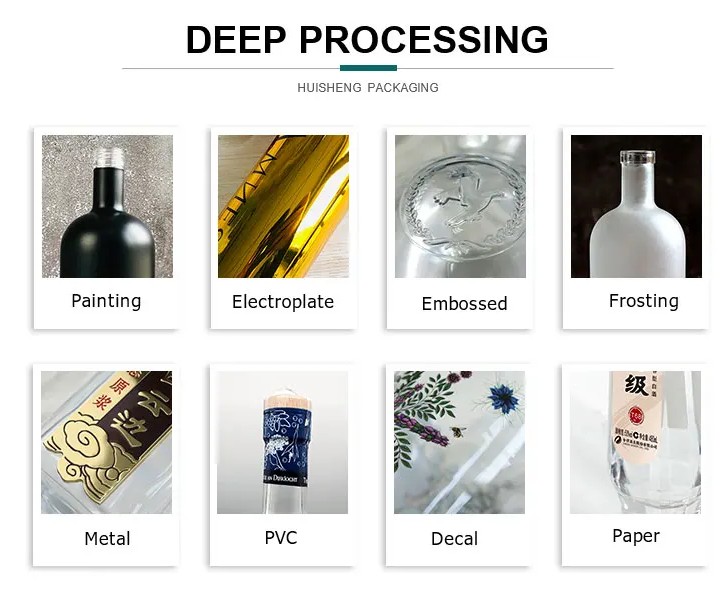
- **Frosting**: Frosting or sandblasting creates a matte or frosted finish on the glass surface, giving the bottles a distinctive texture and appearance.
- **Decaling**: Decaling involves applying decorative decals or labels to the glass bottles. These decals can feature intricate designs, artwork, or branding elements.
- **Embossing/Debossing**: Embossing raises the surface of the glass to create three-dimensional designs or text, while debossing depresses the surface. These techniques add tactile interest to the bottles.
2. **Coloring and Coating**:
- **Spray Painting**: Glass bottles can be spray-painted with different colors or coatings to achieve a specific aesthetic effect. This can include metallic finishes, matte coatings, or translucent colors.
- **UV Coating**: UV coatings can be applied to the surface of the glass to enhance its durability, scratch resistance, and UV protection. These coatings can also add a glossy finish to the bottles.
3. **Specialty Finishes**:
- **Metallic Foiling**: Metallic foils or foiling can be applied to the surface of the glass bottles to create metallic accents or highlights. This technique adds a luxurious and eye-catching element to the packaging.
- **Luster Finishes**: Luster finishes involve applying a special glaze or treatment to the glass surface to create a pearlescent or iridescent effect. This adds depth and dimension to the bottles.
4. **Functional Enhancements**:
- **Anti-Tamper Features**: Anti-tamper seals or bands can be added to the bottle closures to ensure the integrity of the wine and prevent tampering or counterfeiting.
- **Labeling Solutions**: Advanced labeling techniques, such as holographic labels or smart labels with NFC (Near Field Communication) technology, can be integrated into the bottle design for enhanced brand authentication or consumer engagement.
5. **Customization and Branding**:
- **Custom Mold Design**: Custom molds can be created to produce glass bottles with unique shapes, textures, or features that reflect the brand's identity and differentiate the product in the market.
- **Personalization**: Personalized engraving or labeling options can be offered to consumers, allowing them to customize the bottles with their names, messages, or special occasions.
Deep processing techniques offer wineries and beverage companies opportunities to differentiate their products, strengthen brand identity, and create memorable consumer experiences through innovative and customized bottle designs.
- **Etching**: Etching involves engraving designs, patterns, or logos onto the surface of the glass using abrasive techniques. This can create elegant and personalized bottle decorations.
- **Frosting**: Frosting or sandblasting creates a matte or frosted finish on the glass surface, giving the bottles a distinctive texture and appearance.
- **Decaling**: Decaling involves applying decorative decals or labels to the glass bottles. These decals can feature intricate designs, artwork, or branding elements.
- **Embossing/Debossing**: Embossing raises the surface of the glass to create three-dimensional designs or text, while debossing depresses the surface. These techniques add tactile interest to the bottles.
2. **Coloring and Coating**:
- **Spray Painting**: Glass bottles can be spray-painted with different colors or coatings to achieve a specific aesthetic effect. This can include metallic finishes, matte coatings, or translucent colors.
- **UV Coating**: UV coatings can be applied to the surface of the glass to enhance its durability, scratch resistance, and UV protection. These coatings can also add a glossy finish to the bottles.
3. **Specialty Finishes**:
- **Metallic Foiling**: Metallic foils or foiling can be applied to the surface of the glass bottles to create metallic accents or highlights. This technique adds a luxurious and eye-catching element to the packaging.
- **Luster Finishes**: Luster finishes involve applying a special glaze or treatment to the glass surface to create a pearlescent or iridescent effect. This adds depth and dimension to the bottles.
4. **Functional Enhancements**:
- **Anti-Tamper Features**: Anti-tamper seals or bands can be added to the bottle closures to ensure the integrity of the wine and prevent tampering or counterfeiting.
- **Labeling Solutions**: Advanced labeling techniques, such as holographic labels or smart labels with NFC (Near Field Communication) technology, can be integrated into the bottle design for enhanced brand authentication or consumer engagement.
5. **Customization and Branding**:
- **Custom Mold Design**: Custom molds can be created to produce glass bottles with unique shapes, textures, or features that reflect the brand's identity and differentiate the product in the market.
- **Personalization**: Personalized engraving or labeling options can be offered to consumers, allowing them to customize the bottles with their names, messages, or special occasions.
Deep processing techniques offer wineries and beverage companies opportunities to differentiate their products, strengthen brand identity, and create memorable consumer experiences through innovative and customized bottle designs.
Next : Already the first
Related Posts
Check out our press directory hereCheck out our press directory here.
- ▶ Deep processing of wine glass bottles
- ▶ The difference of Crystal white flint, high white flint material
- ▶ Wine glass bottle manufacture process
- ▶ The advantage of crystal white wine glass bottles
- ▶ Some kinds of wine bottles
- ▶ Glass Liquor Bottle Design Trends: What’s Popular in 2023?
- ▶ Glass Liquor Bottle Design Trends: What’s Popular in 2023?
- ▶ How to choose glass bottles